Back to Work

Cambridge University Press

Changing the world of academic publishing through digital modernisation

Cambridge University Press is one of the world's oldest and most respected academic publishers, part of the University of Cambridge. They engaged LION+MASON to research, validate and design an entirely new concept in academic publishing: a collaborative research platform that would allow researchers to share early-stage work and build connections throughout the research process, long before formal publication.

Client
Cambridge University Press
Industries
Education
Duration
8 weeks
Services
Competitor & Market Analysis
User Research (Academic)
Wireframes & Prototyping
User Testing
High Fidelity Designs
Design System
cambridge-university-press-research-directions-ui-design-work

The Challenge

The academic publishing process has changed little in decades, with researchers working largely in isolation until their work is ready for formal submission. Cambridge University Press wanted to explore whether a digital platform could change that, encouraging collaboration and knowledge sharing at the earlier, less visible stages of research. The challenge was not just a design one. The concept itself needed to be validated with real academic researchers before any significant investment was committed.
Our Approach

A full end-to-end product design process ran from initial discovery and concept validation through to high-fidelity design and an atomic design system. Because the platform was a new concept rather than a redesign of something existing, validation was built into every phase before moving forward.

Research & Discovery

Stakeholder workshops with the Cambridge internal team opened the project, clarifying specific aims, defining the target user base, and establishing what success would look like.

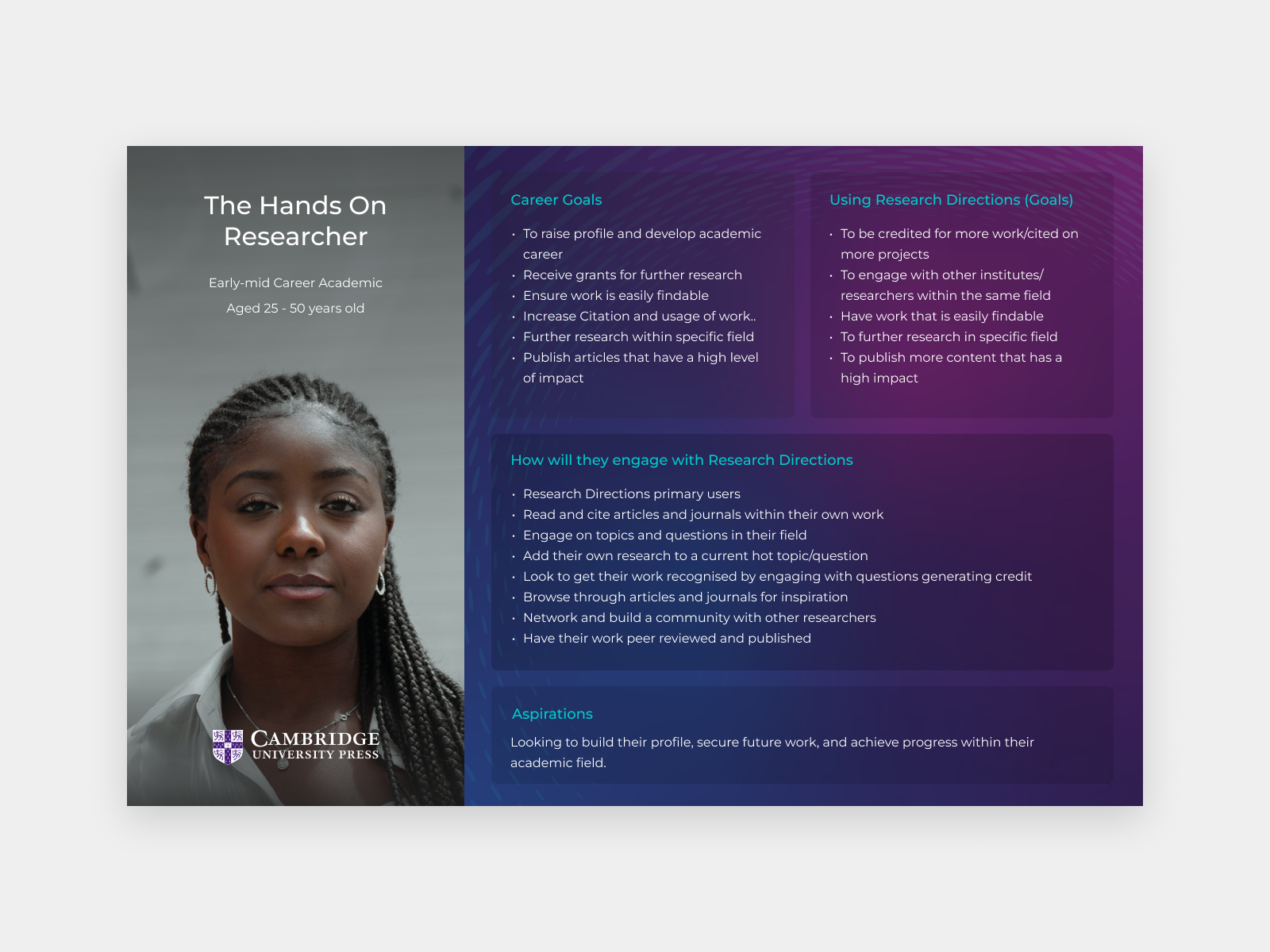
Personas were created to bring the different user types to life and prioritise them based on role, career stage and research needs. This surfaced two primary user types: Hands-On Researchers and Research Shapers. Secondary research into the wider market for academic research tools followed, including a detailed competitor analysis of community collaboration platforms that looked beyond academia to draw inspiration from news and blogging platforms.

user-persona-cambridge-university-press-research-directions-work
User Persona

User Research

Cambridge needed the concept validated with working academic researchers before committing to building it. Twenty-five hours of long-form interviews were planned and conducted with researchers across STEM fields, exploring their experience of the current research and publication process and gauging appetite for a more collaborative platform.

Findings were analysed in two ways: a thematic analysis highlighting the key issues and recurring themes across participants, and detailed user journey maps of the current research and publication process, identifying the pain points and opportunities that the new platform could address.

UX Design

With validated insight in hand, the focus moved to UX design, working through the information architecture for the new platform and mapping out how it would sit within the wider Cambridge digital ecosystem.

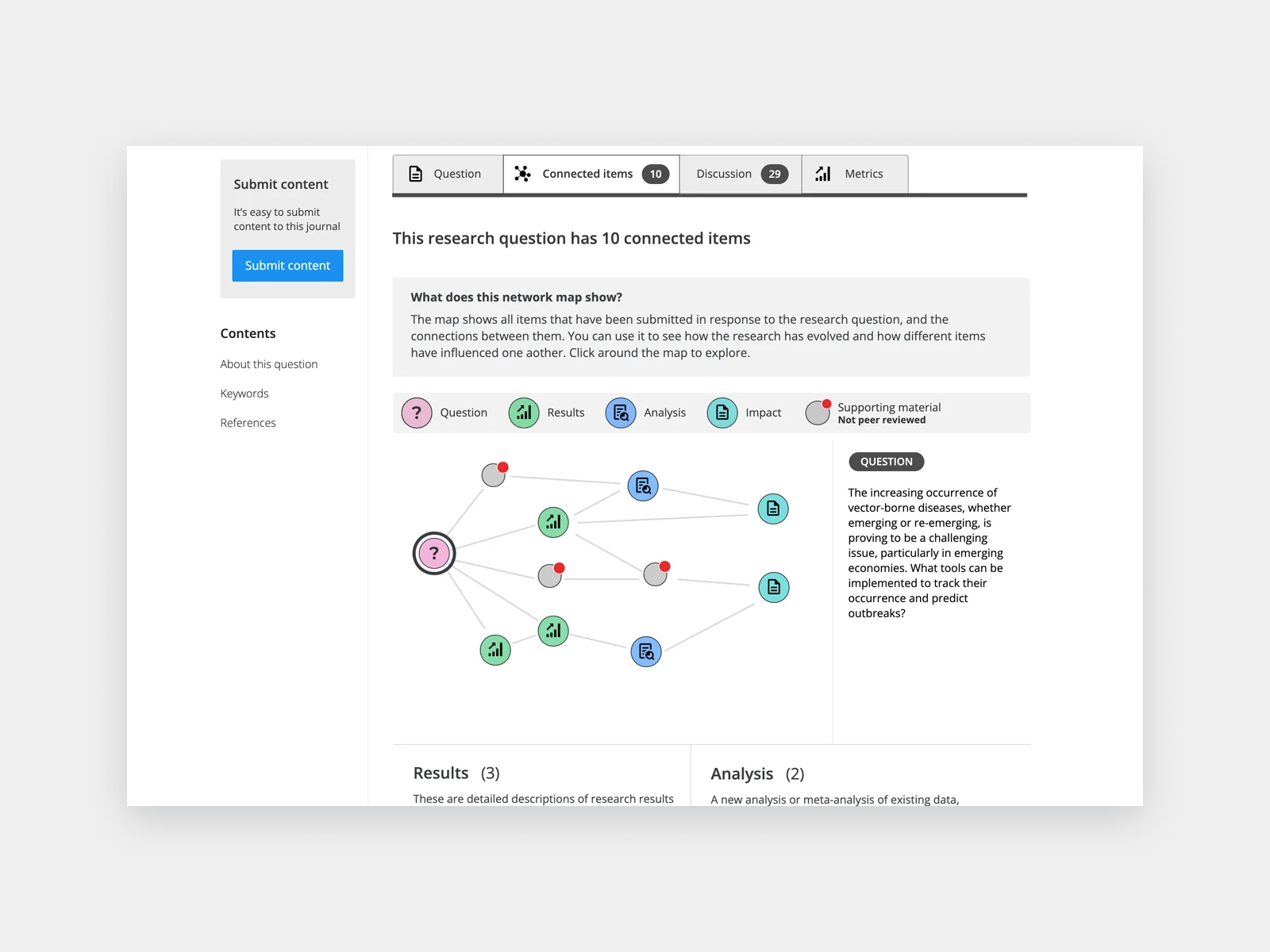
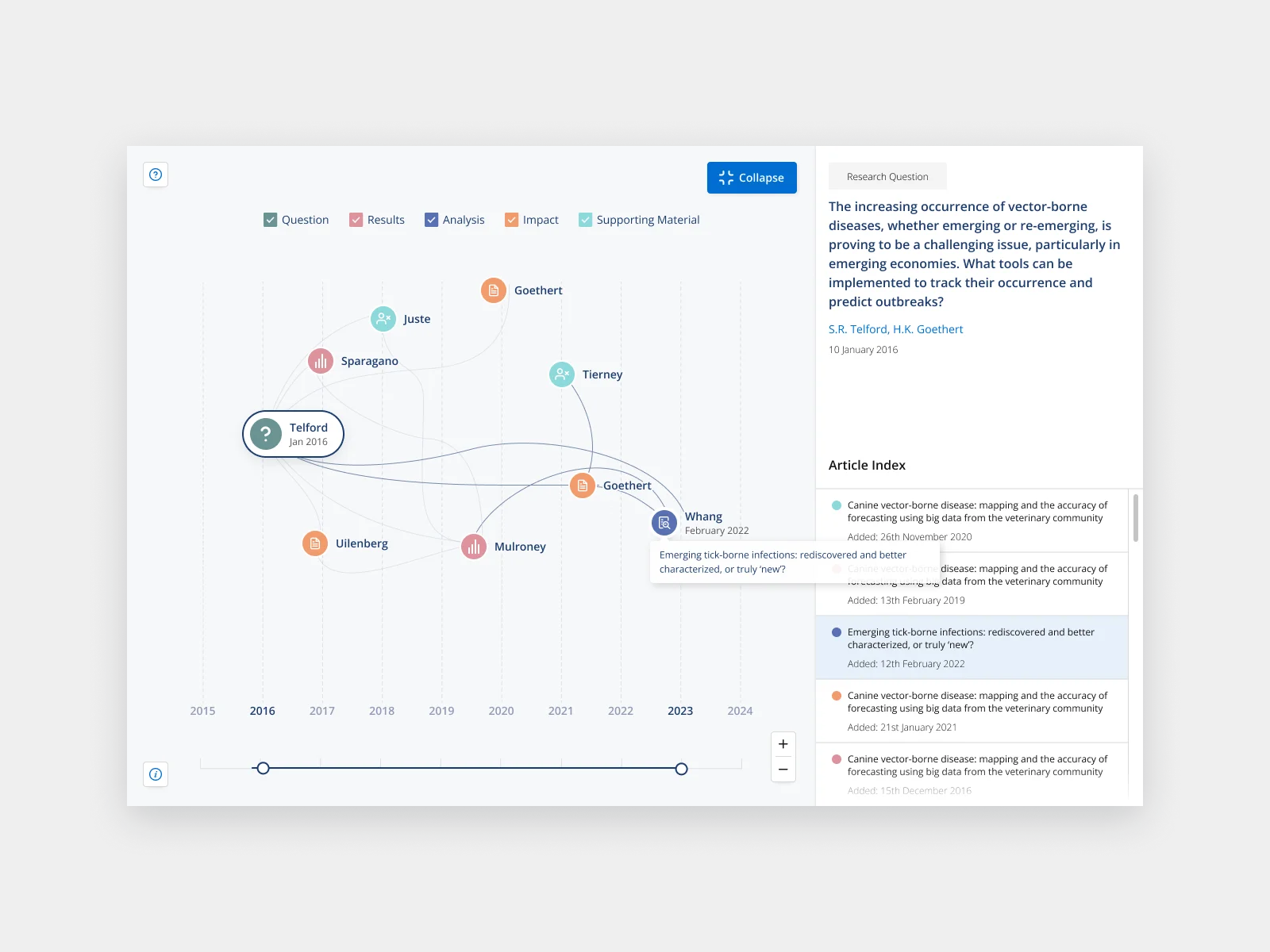
User journeys were mapped showing the different ways researchers could move through the platform. An interactive prototype then brought the concept to life, with the standout feature being a unique network map concept that broke down the traditional academic article format into its constituent parts, visualising the full story of a piece of research from initial conception through to publication.

user-testing-findings-report-screenshot-cambridge-university-press-work
Numerous interactive wireframes

User Testing

Two rounds of user testing with academic researchers were planned and conducted, with regular cycles of iteration between sessions to refine the navigation, labels, copy and UI components based on what was heard.

Testing focused on whether researchers understood the core concept, could navigate the platform intuitively, and found genuine value in the collaborative features. Each round of feedback sharpened the design before moving into the high-fidelity phase.

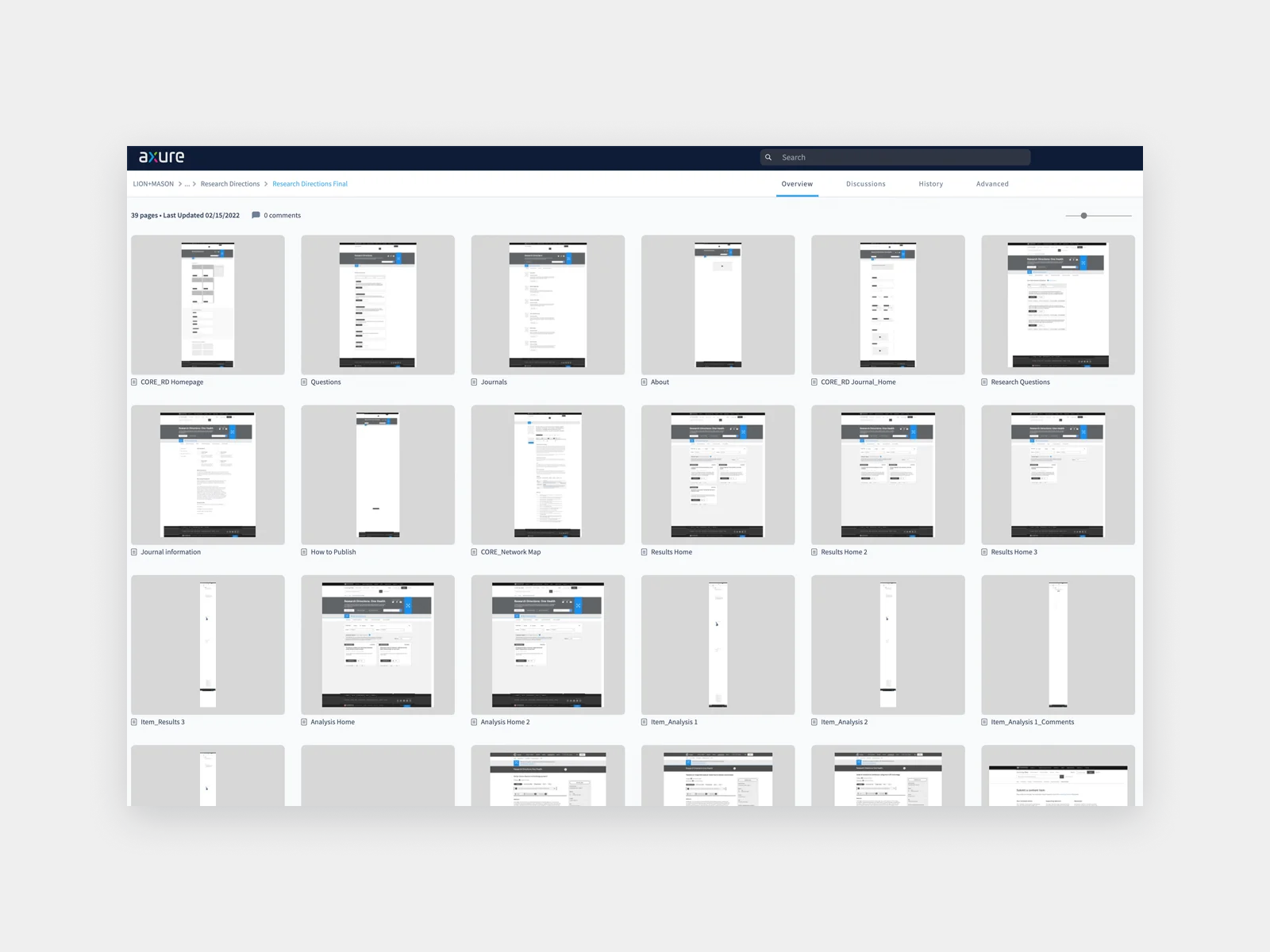
screenshot-axure-wireframes-cambridge-university-press-work
Wireframe of the network map showing connected research (Axure)

UI Design

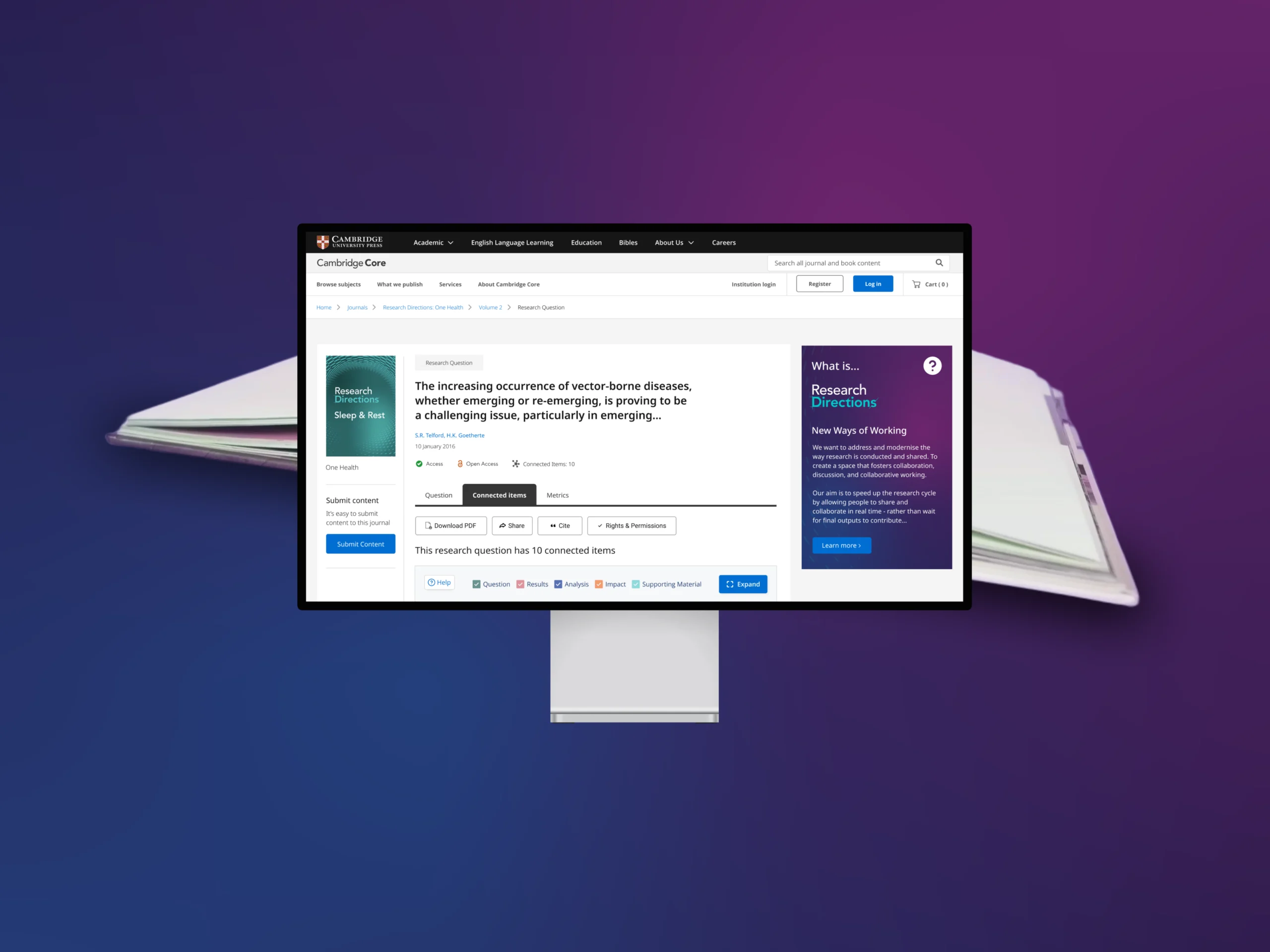
User research and testing findings were incorporated to create high-fidelity page designs for both desktop and mobile. The designs were delivered as an atomic design system, giving Cambridge the flexibility to manage and evolve the platform in-house and making it straightforward to accommodate future changes without starting from scratch.

close-up-ux-design-wireframes-cambridge-university-press-work
Final UI design of the research & collaboration platform

The Results

Cambridge University Press came away with a validated concept, a thoroughly tested design, and a scalable design system ready for development, giving them a strong foundation from which to move the platform forward.

Other Work