Back to Work

L3Harris

Redefining the Flight Simulator Experience

L3Harris design and build flight simulators for the global aviation industry. Combining cutting-edge technology and modern design, they provide an invaluable training service for commercial airlines and flight training centers around the world.

But a clunky training interface in the simulators was getting in the way, causing flight instructors unnecessary frustration and time.

Client
L3Harris
Industries
Aviation
Duration
12 Weeks
Services
UX Audit
In-field User Research
Wireframes & Prototyping
User Testing
High Fidelity Designs
Versatile Component Library
l3harris-flight-simulator-ui-work
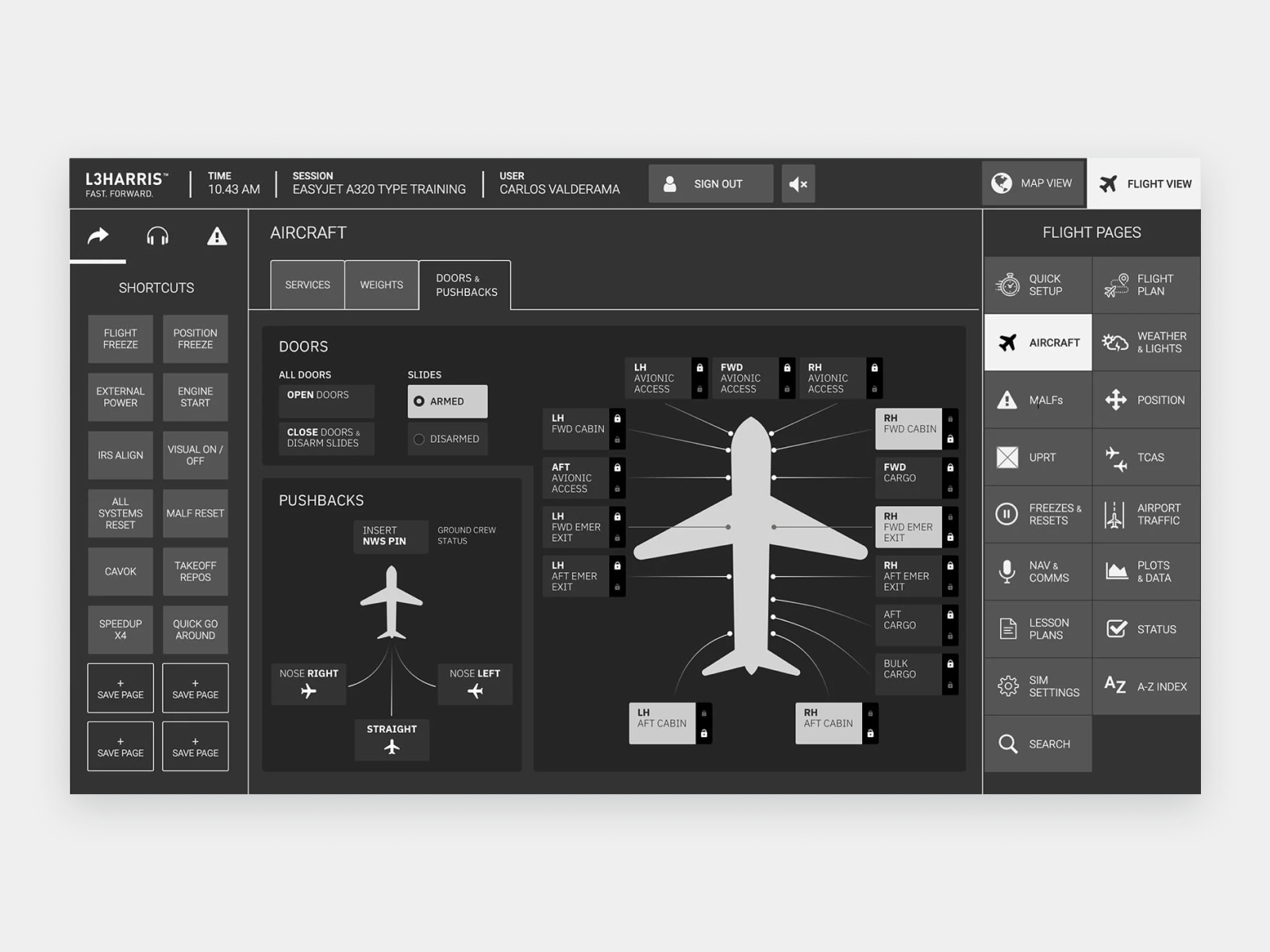
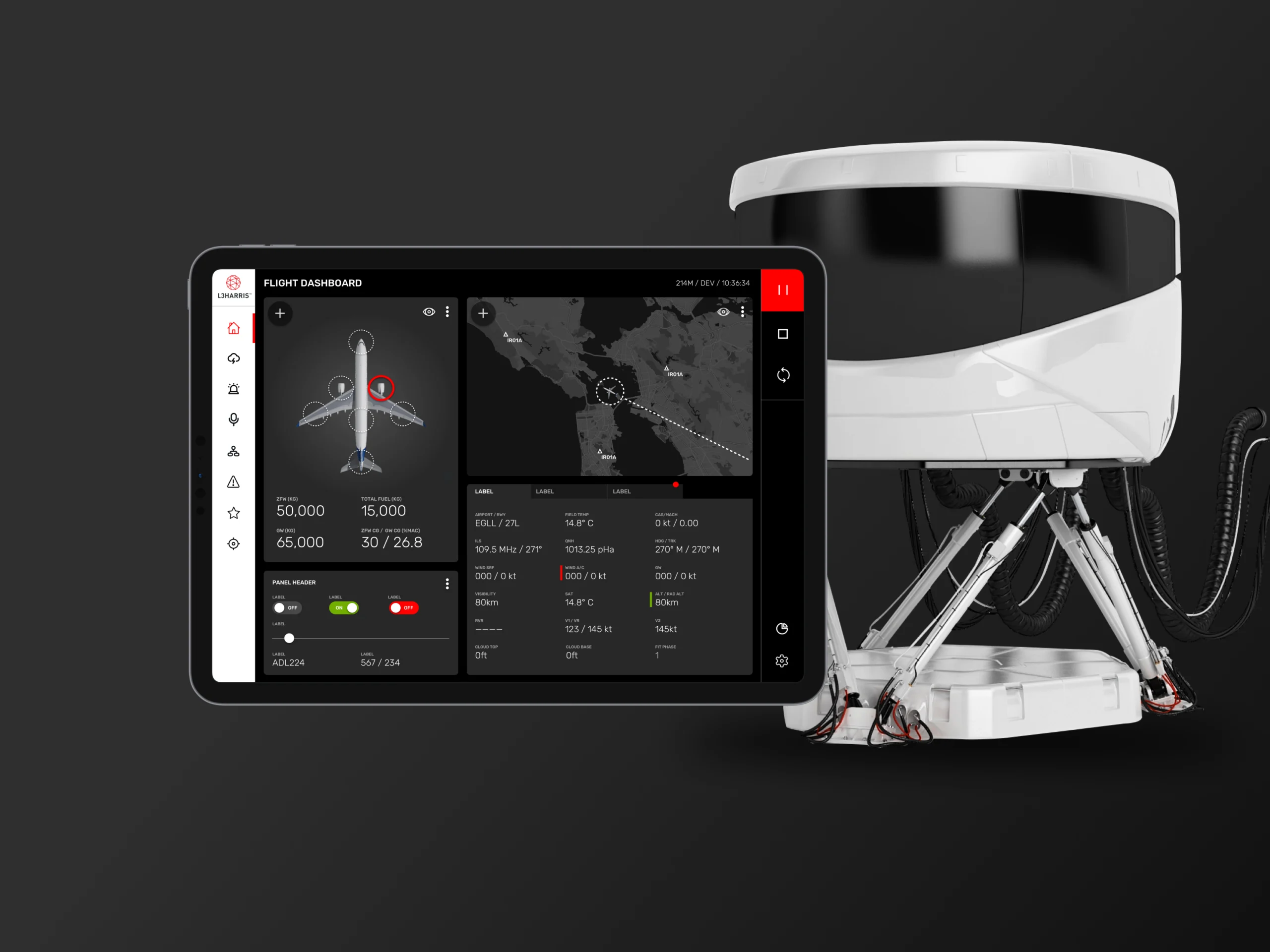
Final UI Design of the flight simulator

The Challenge

The existing interface inside the flight simulators had not kept pace with the complexity of the training it was designed to support. Flight instructors were working around the system rather than with it, navigating poor information architecture, unclear controls and a UI that had not been designed with the physical realities of the cockpit environment in mind. L3Harris needed a complete redesign of the training interface, built around how instructors actually work.
Our Approach

An immersive, research-led process began with two weeks on site inside the simulator environment. Every design decision that followed was rooted in direct observation of how flight instructors actually worked, rather than assumptions about what they needed.

Research & Discovery

To understand the specialist subject matter properly, the team immersed themselves in the world of aviation. Two weeks were spent on site conducting in-field research: observing more than 20 hours of in-simulator flight training, reviewing and evaluating the existing interface, and identifying the key users, their tasks and their priorities.

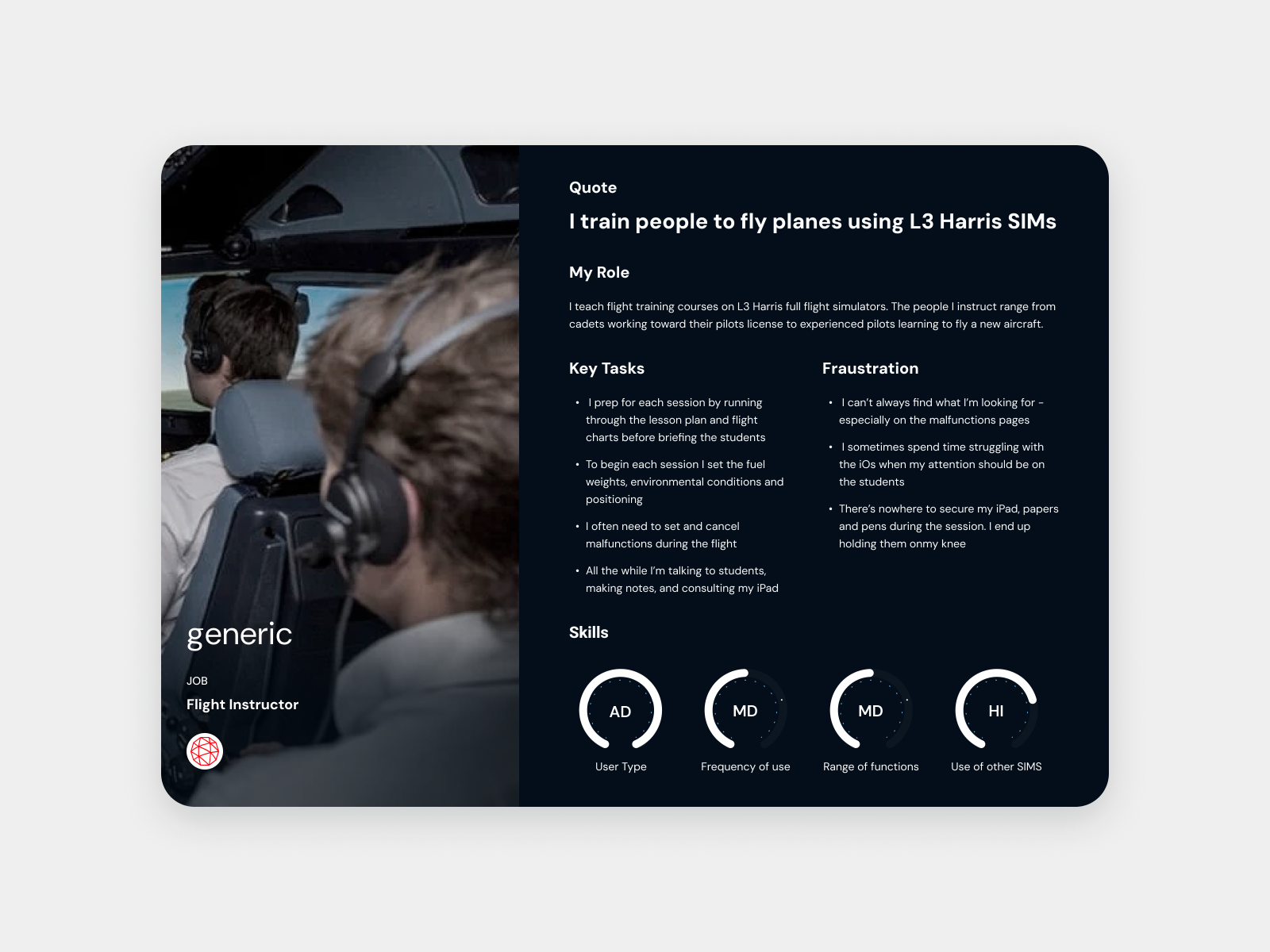
User interviews, stakeholder workshops and ethnographic research built a thorough picture of the environment, the pressures instructors work under and the moments where the current system was letting them down. Detailed personas and user stories were developed from these findings to guide the design process.

persona-flight-instructer-l3-harris-work
User Persona

UX Design

With a deep understanding of the user environment in place, the foundations of a new user flow and information architecture were defined, built around how instructors actually think and work rather than around the technology.

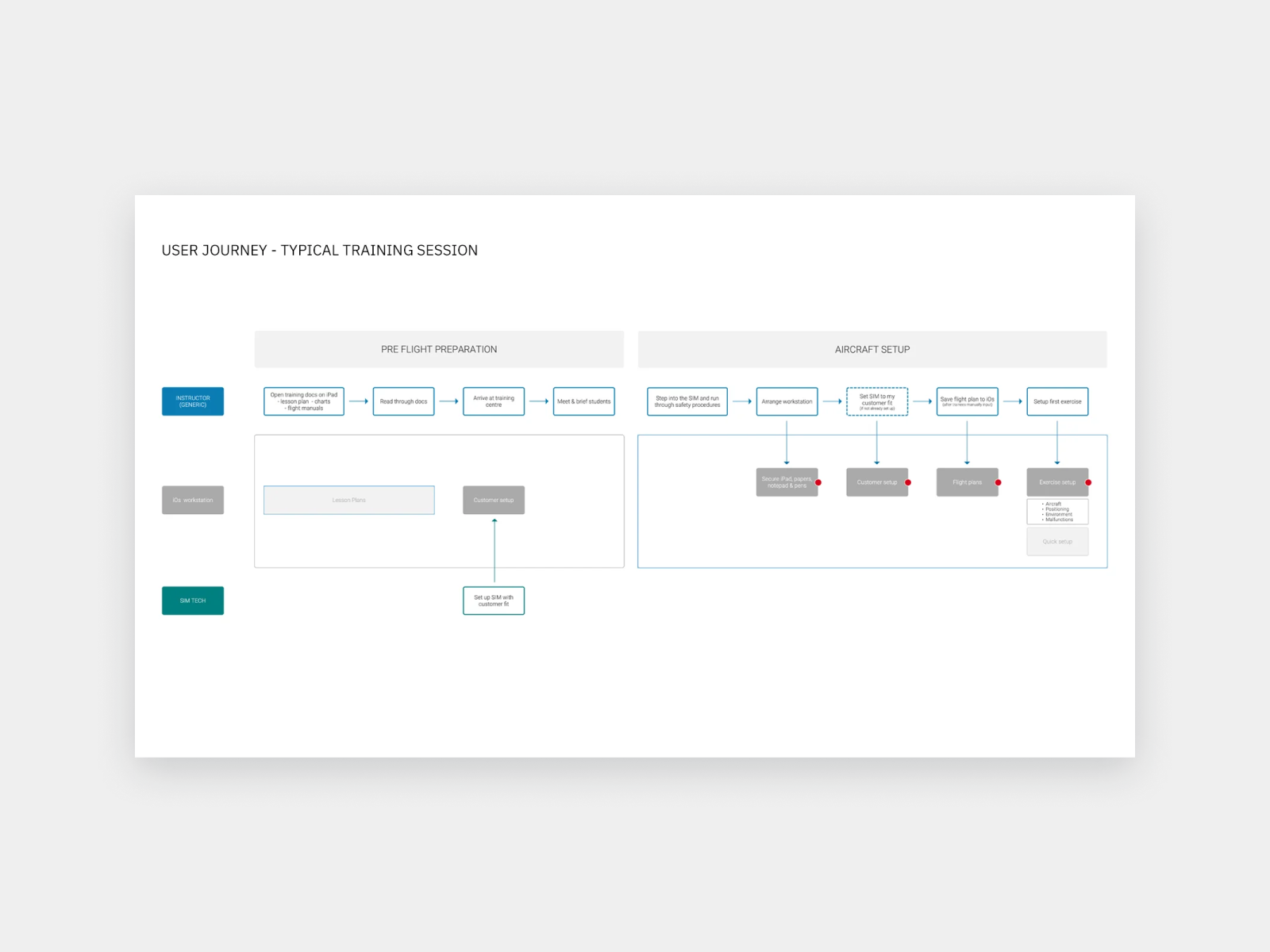
Key tasks and scenarios were identified and addressed, user journeys were simplified to reduce steps and remove jargon, and a new navigation system was designed to account for the physical constraints of the cockpit environment. The result was a cleaner, more logical experience that allowed instructors to focus on training rather than fighting the interface.

user-journey-flight-training-l3-harris-work
Screenshort of mapped user journeys

UI Design

The UI design layer reflected L3Harris’s brand values while directly serving the needs of users working in a demanding, low-light environment.

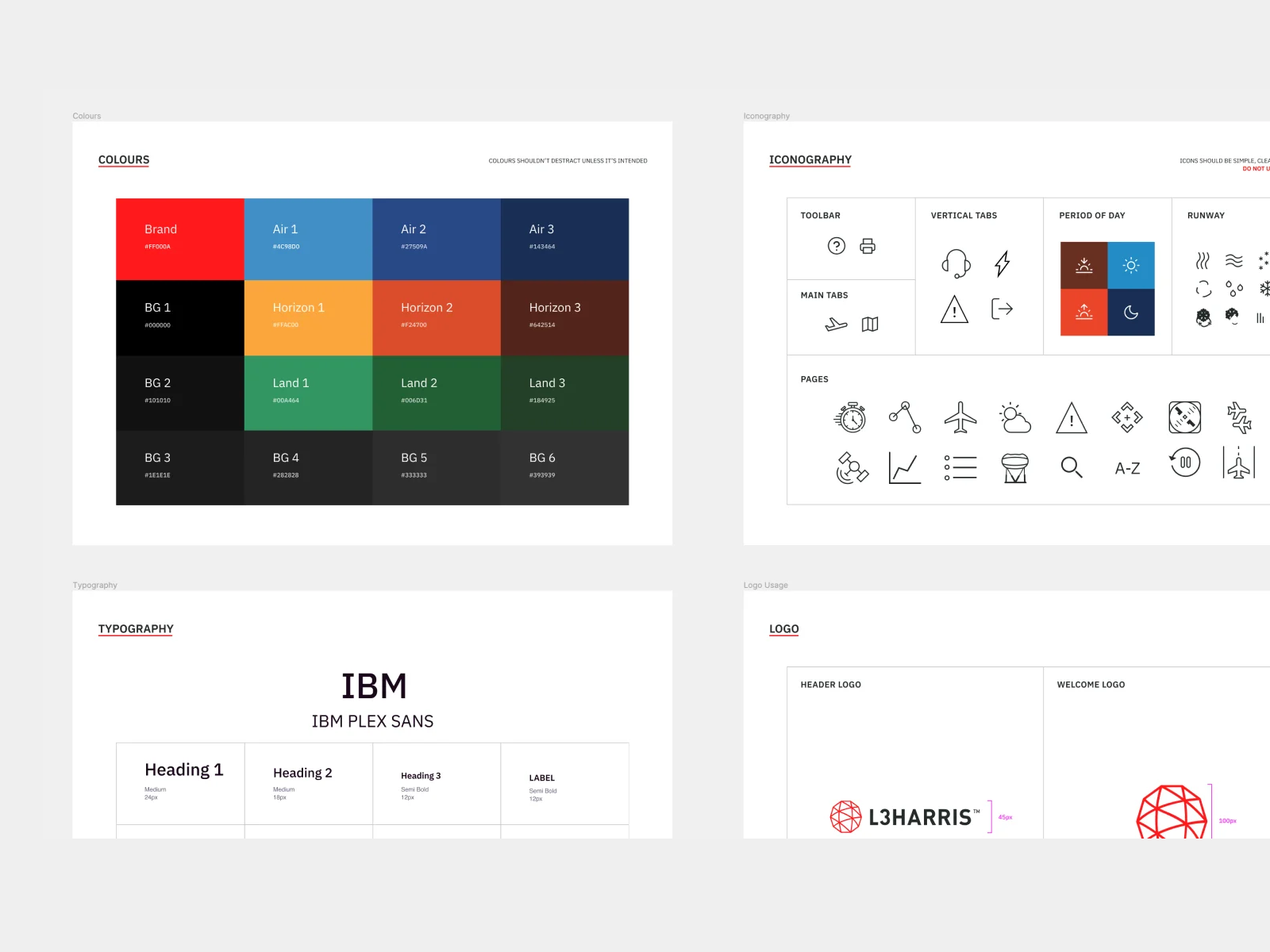
A simple but versatile component library was built covering all the buttons, tables, switches and dials needed to control every feature and function. A flat design aesthetic was applied throughout, prioritising visual clarity and ease of use, with a dark colour palette optimised for low-light conditions and a clean layout built for maximum readability. Close liaison with the L3Harris technical team throughout this phase ensured every design decision was viable within their build environment.

brand-guidelines-l3-harris-work
Component Library

User Testing

A flexible testing strategy was implemented to capture feedback from a diverse range of instructors across different locations in a consistent and comparable format.

The approach combined quantitative and qualitative feedback, with follow-up interviews to dig into the reasoning behind responses. Survey design and tone of voice were carefully considered to maximise comprehension and completion rates across EU regions. Remote testing respected users’ own environments and device preferences, and findings were analysed comprehensively to validate the design and identify any remaining areas for refinement.

wireframes-flight-simulator-l3-harris-work
Prototype used in testing

The Results

The redesigned interface gave L3Harris a training platform that worked with instructors rather than against them, delivering a meaningful improvement to the day-to-day experience of flight training.

Other work